
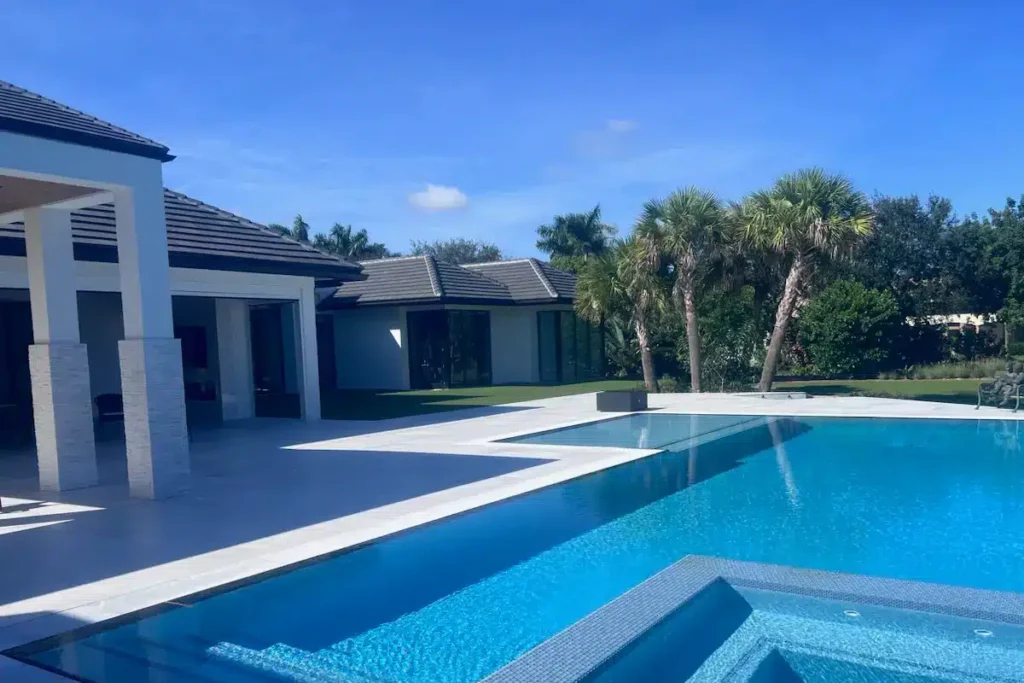
Luxury homes represent far more than size, price, or visual grandeur. At their highest level, they are deeply personal works of architecture shaped around the lifestyle, expectations, and long-term vision of the homeowner.
These residences may include expansive interiors, resort-style outdoor environments, sophisticated technology, rare materials, custom millwork, waterfront features, wellness spaces, and architectural details created specifically for one property. Yet those visible elements tell only part of the story.
Behind every exceptional custom home is a demanding process of planning, engineering, coordination, craftsmanship, decision-making, and quality control. Hundreds of design choices and thousands of construction details must work together without weakening the architecture, performance, or personal character of the residence.
The professional responsible for managing this complexity is the luxury home builder. More than a contractor, the luxury builder becomes the central figure entrusted with protecting the vision and transforming it into a finished home.
A luxury home builder specializes in creating highly customized residences designed around the specific needs, preferences, and aspirations of an individual client.
Unlike builders who reproduce standard floor plans or offer a predetermined collection of finishes, a luxury builder works within a process in which nearly every major element may be unique.
The architecture, room relationships, structural systems, materials, cabinetry, lighting, technology, landscape, outdoor environments, and specialty spaces are coordinated according to the property and the homeowner.
The result is not a variation of a familiar product. It is a one-of-a-kind residence created for one client and one location.
Every home builder coordinates labor, materials, schedules, inspections, and construction activities. A luxury home builder must do all of this while also managing a much higher level of customization, technical complexity, and client expectation.
The builder must understand how architecture, structure, mechanical systems, lighting, technology, cabinetry, stone, glass, landscape design, pools, and exterior living spaces affect one another.
A change to one ceiling may influence ductwork, lighting, speakers, shades, structural framing, and millwork. A glass wall may affect engineering, cooling requirements, waterproofing, privacy, and furniture placement.
The luxury builder must maintain a complete view of the project while remaining accountable for the smallest detail within it.
A defining characteristic of a luxury home builder is an unwavering commitment to quality.
This commitment extends beyond visible finishes. Foundations, concrete, framing, waterproofing, roofing, plumbing, electrical systems, insulation, mechanical equipment, windows, doors, and concealed infrastructure must receive the same disciplined attention as cabinetry, stone, lighting, and furnishings.
The builder must verify materials, review workmanship, protect completed areas, and correct inconsistencies before they become hidden or difficult to resolve.
Excellence cannot be applied near the end of the project. It must be maintained through every stage that leads to completion.
Luxury construction begins with understanding how the homeowner wants to live.
The builder, architect, and design team must consider daily routines, family needs, entertaining preferences, professional responsibilities, wellness priorities, privacy expectations, collections, hobbies, travel patterns, and long-term plans.
One client may require a professional-level kitchen, expansive entertaining areas, and a catering pantry. Another may prioritize a private office suite, automotive gallery, spa environment, fitness center, guest wing, wine room, or waterfront pavilion.
Customization is not simply choosing different finishes. It is the process of shaping the entire residence around the individuality of the homeowner.
Luxury homes are defined not only by large architectural gestures, but also by the precision of their smallest details.
Millwork must align with walls, ceilings, lighting, and flooring. Stone veining may need to continue across multiple slabs. Cabinet reveals must remain consistent. Glass, metal, plaster, tile, wood, and trim must meet cleanly.
These transitions require early planning and careful coordination among multiple trades. Even a minor deviation in structure or framing can affect the materials installed much later.
A luxury home builder understands that refinement is often revealed in the places where different materials, systems, and crafts come together.
The use of expensive materials does not automatically create a luxury home.
Natural stone must be selected, sequenced, fabricated, supported, and installed properly. Custom cabinetry depends upon accurate dimensions, straight walls, quality hardware, and careful finishing. Wood must be selected and installed with environmental conditions in mind.
Glass, metalwork, plaster, flooring, tile, fixtures, and architectural details each require specialized knowledge and experienced tradespeople.
The luxury builder identifies, coordinates, and oversees the craftsmen capable of delivering the standard the architecture requires.
A luxury home builder must understand more than the sequence of construction.
The builder should understand proportion, alignment, sightlines, ceiling relationships, material continuity, natural light, circulation, privacy, and the way interior and exterior spaces connect.
When field conditions create a conflict, the solution must preserve the architectural intent rather than simply choosing the easiest construction response.
The builder becomes a steward of the design, responsible for translating drawings and concepts into a finished residence without allowing the vision to be weakened along the way.
Large open interiors, expansive glass walls, floating stairs, cantilevers, uninterrupted ceilings, and dramatic structural forms may appear simple after completion.
Achieving that appearance may require sophisticated engineering, structural steel, reinforced concrete, concealed supports, customized connections, and precise sequencing.
Mechanical, plumbing, electrical, and low-voltage systems must also be integrated without compromising the architecture.
A luxury builder understands that the cleanest finished spaces are often supported by the most carefully coordinated work behind the walls and above the ceilings.
Luxury home builders must remain informed about developments in home automation, lighting control, climate systems, security, access, entertainment, shading, energy management, pools, and exterior environments.
Technology should be planned early enough to coordinate equipment rooms, wiring, ventilation, controls, cabinetry, ceilings, and future access.
The goal is not to fill the residence with the greatest number of devices. It is to create reliable systems that work together naturally and can be maintained or updated over time.
When technology is integrated correctly, it becomes an almost invisible layer of comfort, security, convenience, and control.
Today’s luxury homeowner often expects the residence to perform efficiently and respond intelligently to its environment.
High-performance glazing, insulation, mechanical design, humidity control, efficient lighting, water management, durable materials, and thoughtfully selected equipment can improve comfort while reducing unnecessary consumption.
In coastal and high-exposure environments, resilience also becomes essential. Waterproofing, drainage, wind resistance, corrosion-resistant components, impact glazing, and exterior material performance require careful attention.
A truly sophisticated residence combines beauty with the technical performance required to remain comfortable and dependable over time.
Luxury service extends beyond the physical construction of the residence.
Clients should receive clear communication, organized decision-making, realistic expectations, timely updates, and meaningful guidance throughout the process.
The builder should be responsive without overwhelming the homeowner with unnecessary technical detail. Challenges should be communicated honestly, solutions should be presented clearly, and important decisions should be documented.
A well-managed experience allows the client to remain engaged with the vision while trusting the builder to manage the complexity required to achieve it.
A custom luxury project may involve major financial decisions, specialized materials, evolving designs, complex approvals, and a lengthy construction schedule.
The client must trust that the builder will communicate clearly, manage commitments responsibly, protect the design intent, and remain accountable when unexpected conditions arise.
Transparency does not mean that every stage will be free of challenges. It means that the client understands what is happening, why it matters, and how the team intends to move forward.
This confidence becomes one of the most important qualities of the builder-client relationship.
All professional builders share a responsibility to create safe, durable, and properly constructed homes. The distinction lies in the level of customization, complexity, coordination, service, and craftsmanship required.
Production builders typically work from standardized plans, established material packages, repeatable schedules, and limited customization. This system allows homes to be delivered efficiently to a broader market.
Luxury builders work within a different process. Plans may be unique, materials may be sourced specifically for one project, details may require custom fabrication, and the construction sequence may need to adapt to specialized systems and finishes.
The process is less repetitive because the residence itself is not intended to be repeated.
A luxury home may be substantial in size, but square footage alone does not define the category.
Complexity may arise from architecture, structural spans, waterfront conditions, custom glass, specialized mechanical systems, advanced technology, intricate finishes, multiple kitchens, wellness environments, guest accommodations, pools, gardens, and custom outdoor spaces.
The builder may need to coordinate architects, engineers, interior designers, landscape professionals, lighting specialists, technology consultants, pool contractors, marine professionals, artisans, and numerous trades.
The luxury builder’s ability to organize these contributors and maintain one standard across the project becomes essential.
Production construction may allow buyers to select among predetermined options. Custom luxury construction begins with a much broader range of possibilities.
Room dimensions, ceiling heights, window openings, stair designs, cabinetry, lighting, technology, flooring, plumbing fixtures, exterior materials, pools, gardens, and specialty environments may all be developed specifically for the homeowner.
This flexibility creates opportunity, but it also creates greater responsibility. Decisions must be made in the correct sequence and coordinated before they affect later work.
The luxury builder helps convert an almost limitless field of choices into one disciplined and cohesive residence.
Luxury homeowners often seek a residence that cannot be confused with a standard product or duplicated in another location.
This individuality may be expressed through architecture, materials, commissioned features, art integration, landscape design, interior detailing, and specialty spaces.
However, distinctiveness should remain connected to architectural discipline. A home filled with unrelated ideas may feel expensive without feeling refined.
A skilled luxury builder helps preserve the individuality of the residence while maintaining the cohesion required for lasting design.
A final inspection cannot create quality that was missing during construction.
Structural work, waterproofing, plumbing, electrical systems, mechanical installations, insulation, windows, doors, substrates, cabinetry, stone, flooring, and finishes should be reviewed at the appropriate stages.
Concealed work should be inspected before walls and ceilings are closed. Materials should be verified before installation. Completed areas should be protected while later trades continue working nearby.
Continuous oversight allows problems to be resolved before they become expensive, disruptive, or permanently concealed.
The initial presentation of a completed residence is important, but the deeper measure of quality begins after the homeowner moves in.
Doors, windows, cabinetry, stone, flooring, plumbing, mechanical systems, technology, pools, drainage, roofing, and exterior materials must continue to perform through daily use.
The home should remain comfortable, quiet, organized, secure, and visually refined without requiring constant correction.
True luxury is measured not only by how the residence appears on completion day, but by how confidently it serves the homeowner through the years that follow.
Custom luxury construction may involve financing structures that differ from a conventional home purchase.
Depending upon the client, property, lender, and project, financing may involve construction loans, land financing, private banking relationships, staged draws, appraisals, inspections, equity requirements, and conversion to permanent financing.
An experienced luxury builder is often familiar with the documentation and project information lenders may request during the construction process. This may include plans, specifications, budgets, schedules, contracts, change documentation, draw requests, lien waivers, and evidence of progress.
The builder does not replace the lender, financial advisor, attorney, or accountant, but can help ensure that construction administration remains organized and responsive to applicable financing requirements.
Luxury home builders may develop professional relationships with banks, private banking teams, construction lenders, appraisers, title professionals, and other financial-service providers through prior projects.
These relationships do not guarantee approval, preferred rates, special terms, or a particular financing outcome. Every loan remains subject to the lender’s underwriting standards, the borrower’s qualifications, the property, the project, and prevailing market conditions.
However, a builder who understands construction lending can communicate effectively, prepare required documentation, support draw inspections, and help reduce avoidable delays caused by incomplete or inconsistent project information.
For the client, the value lies less in promises of financing and more in having a construction team that understands how the financial and building processes must remain coordinated.
A portfolio is an important starting point, but beautiful photographs reveal only the visible conclusion of a much larger process.
Prospective clients should also evaluate the builder’s communication, project organization, technical knowledge, design coordination, quality-control practices, financial administration, problem-solving ability, and experience with specialized residential construction.
The builder should be able to explain how decisions are documented, how changes are managed, how quality is reviewed, how schedules are maintained, and how the client remains informed.
The finished home demonstrates the aesthetic result. The builder’s process reveals whether that result can be delivered with discipline and consistency.
The quality of the builder’s answers can reveal as much as the portfolio itself.
Ronin Development approaches each residence as a one-of-a-kind project shaped around the client, the property, and the architectural vision.
The process extends beyond selecting beautiful materials and creating impressive rooms. Architecture, structure, waterproofing, mechanical systems, electrical planning, technology, cabinetry, outdoor environments, and final detailing must support one another.
The visible quality of the residence receives careful attention, but so does the concealed work that allows the home to remain reliable, comfortable, and refined.
The objective is a custom home that feels deeply personal, architecturally cohesive, and built to meet the expectations of luxury living for years to come.
A luxury home builder is not defined solely by the price or size of the residences completed.
The distinction is found in the ability to manage customization, architecture, engineering, craftsmanship, technology, service, quality control, and client expectations at an exceptional level.
The property creates the opportunity. Architecture gives the vision form. Engineering gives it strength. Materials and craftsmanship give it refinement. Technology and personalization give the home its daily character.
The builder is responsible for bringing all of these elements together without allowing one to weaken another.
For the homeowner, choosing the right luxury builder means choosing the professional who will guide one of the most significant and personal projects of a lifetime.
When that responsibility is approached with discipline, transparency, craftsmanship, and respect for the client’s vision, the result becomes more than an extraordinary residence. It becomes a home of enduring identity and lasting value.
If you are considering building a custom luxury residence in South Florida, Ronin Development welcomes the opportunity to bring your vision to life. From property planning, architecture, structural performance, and coastal resilience to custom interiors, intelligent technology, resort-style outdoor environments, waterfront features, and the smallest finishing details, every element can be coordinated as part of one complete commitment to craftsmanship and excellence.

This article is provided for general informational and marketing purposes only and should not be considered architectural, structural, engineering, construction, financial, lending, investment, appraisal, real estate, legal, tax, insurance, environmental, permitting, code, or other professional advice. Builder capabilities, construction methods, financing requirements, loan terms, interest rates, draw procedures, lender relationships, material performance, project costs, schedules, and regulatory requirements vary by builder, lender, borrower, property, project, jurisdiction, and market conditions. No relationship between a builder and a financial institution guarantees loan approval, preferred terms, competitive rates, expedited processing, or a particular financing outcome. Prospective homeowners, buyers, investors, and property owners should consult qualified builders, architects, engineers, lenders, financial advisors, attorneys, accountants, insurance professionals, appraisers, title professionals, and applicable governmental authorities before purchasing property, arranging financing, planning a luxury residence, or beginning construction.